A practical process for building custom digital products.
Good development is more than writing code. It starts with understanding the goal, shaping the right solution, and making thoughtful decisions all the way through launch.
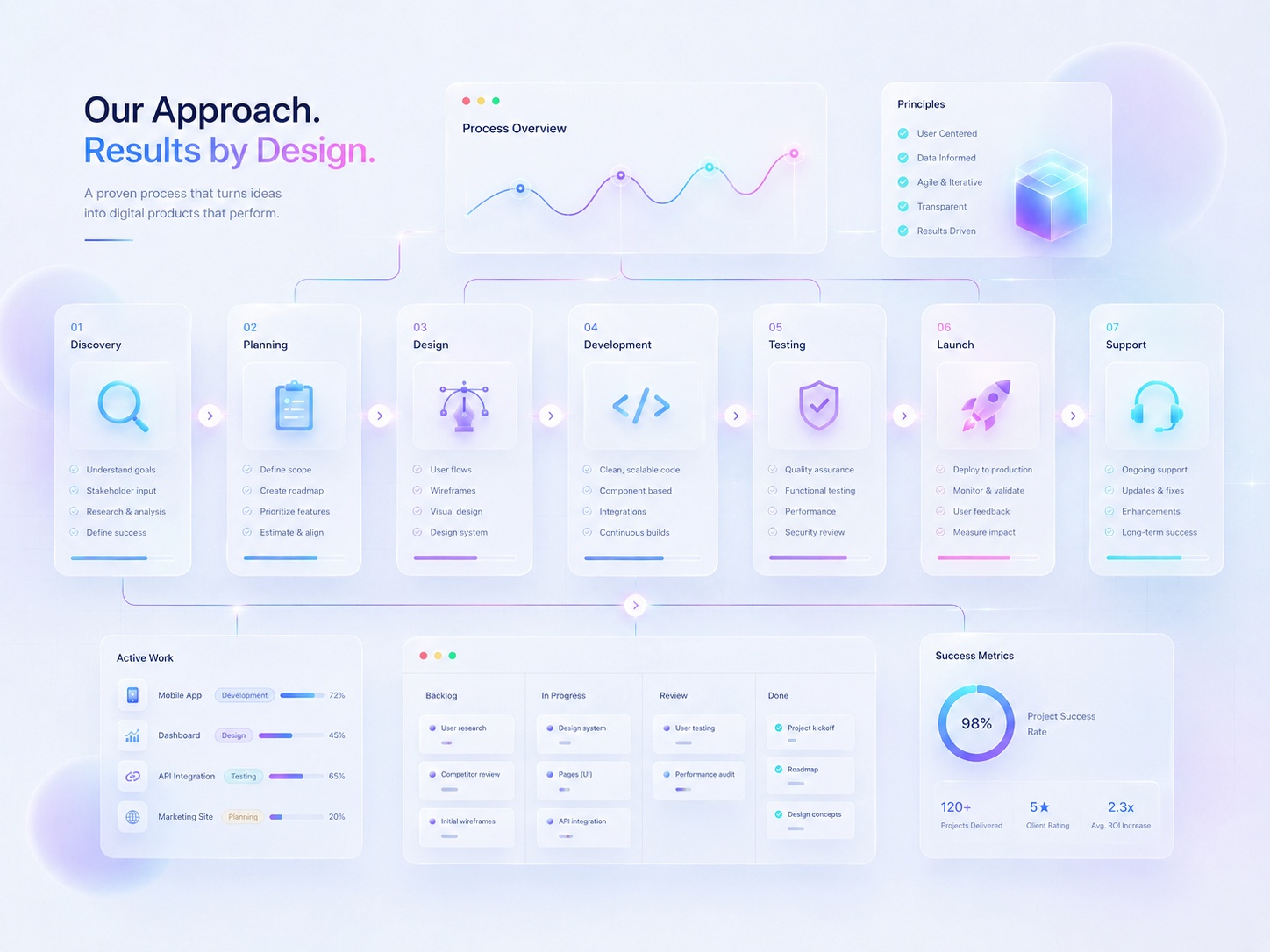
From first conversation to production.
Project scope can vary, but these stages keep the work organized and focused on the outcome.
Discovery & Requirements
We begin by understanding the organization, users, goals, pain points, current workflow, and what success should look like. This is where we identify required pages, features, data, integrations, permissions, and other project constraints.
Structure & Experience
Before development, we organize the information and user journey. For websites, that means page hierarchy and conversion paths. For applications, it means screens, workflows, roles, actions, and the movement of data through the system.
Visual Direction
We define the visual language—typography, spacing, color, component style, image direction, and responsive behavior—so the finished project feels cohesive and professional rather than assembled from unrelated pieces.
Development
We build the front end and back end, connect required services, implement validation and business rules, and keep the project organized so future changes remain manageable.
Testing & Refinement
We review functionality, responsive layouts, forms, navigation, error states, integrations, and key user paths. Details are refined before the project is considered ready for production.
Deployment & Handoff
The final build is prepared for its production environment. We verify the deployment, confirm major functions, and make sure the project has a clean path for future updates.
There is room to refine the solution as the project takes shape.
Custom work often reveals better ideas once the real interface and workflow become visible. Our approach allows for thoughtful refinement while keeping the project centered on the agreed goals.
The result should not only meet the initial requirements—it should feel coherent, intuitive, and ready to support actual use.
Discuss Your Project →